|
|
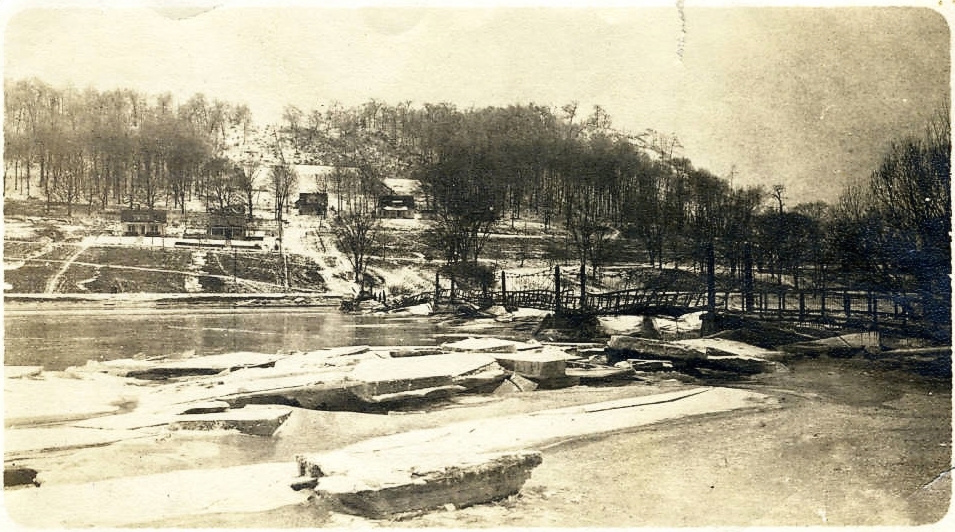
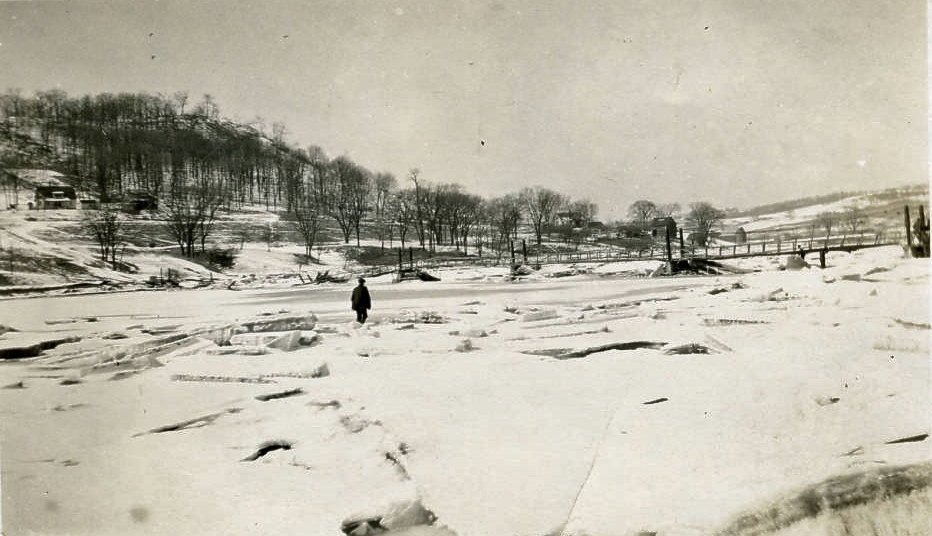
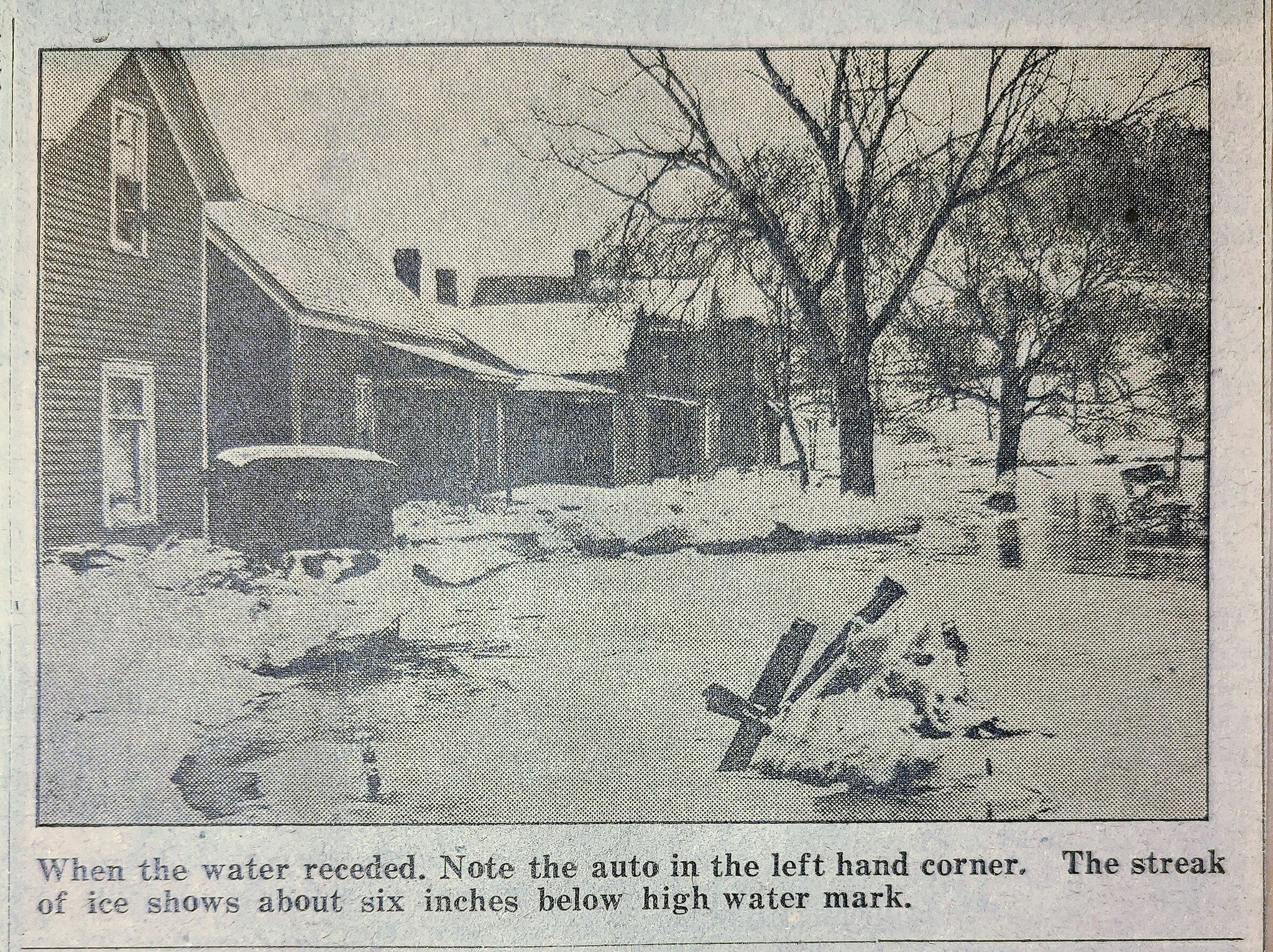
Feb 22 1922 one of the worst floods and ice jams occurred in Richland County history. The following is the account published in the newspaper the following week. The entire state and much of the midwest were affected.
Storm Causes Flood In Second Ward.
Almost Twenty-five Blocks Under Water and Many Homes are Flooded.
WATERS FILL
CELLARS CAUSING A LARGE LOSS.
Residents Forced to Flee Before Rush of Ice and
Water as Ice Jam Forms at Bridge.
Richland Center and Richland county were
hard hit Wednesday of last week when one of the worst storms of the history of
the county swept over the state. In Richland Center the west section of the
second ward was flooded as it never has been flooded before and hundreds of
people were taken from their homes, being carried to places of safety by auto
trucks, drays, and boats.
The storm that caused the damage started Monday
night and owing to the frozen condition of the ground the water ran down streets
and Wednesday afternoon the river began to rise at a rapid rate. Telephone
messages from the north brought news early in the afternoon that a flood was
coming down Pine River valley and advised all those residing near the river to
move out. Men and women went through that part of the second ward which has
suffered before, warning the people of the approaching danger. Some families
took heed, but the greater majority failed to profit from the messages and
stayed at their homes until it was necessary to send drays and boats to get them
out. With the rising of the water in the pond, the ice began to move out forming
a jam below and above the footbridge. This ice jam threw the fast-rising waters
across the northwest section of the town and in a short space of time the water
had reached points three and four blocks east of the river. At 11:00 o'clock
p.m. The fire alarms were sounded and the work of rescue was carried on by a
large number of men, who waded waist-deep in the waters carrying household goods
to higher and dryer ground. The rush of the waters and the roar of the grinding
ice filled the night with terror to those who lived in the flooded section.
Cellars were soon filled and the water began to creep high and higher, finding
its way into the houses through the door cracks and in a short space of time had
reached the windows and began to flow in. By this time most of the people were
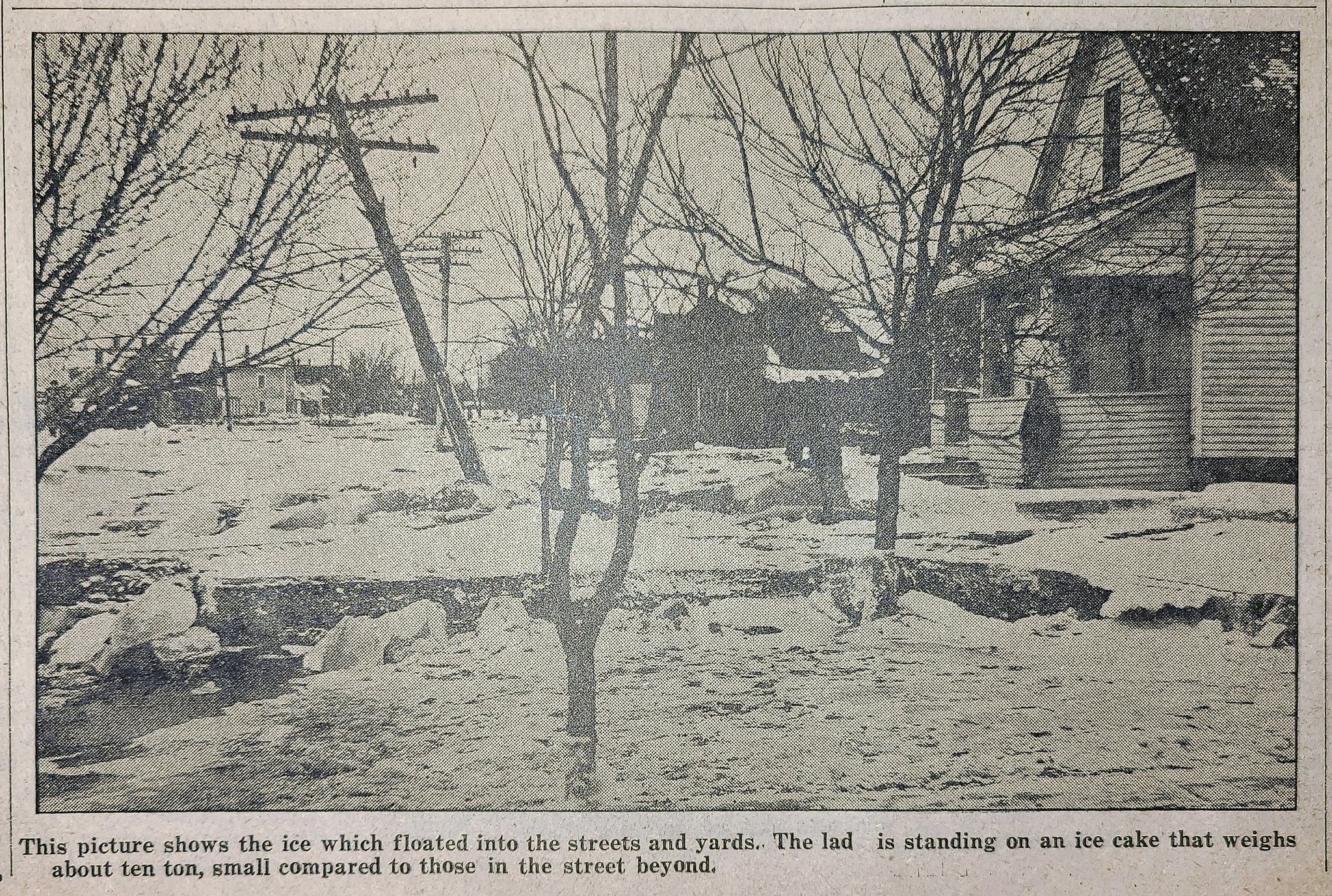
out of their homes or were being gotten away as rapidly as possible. Huge cakes
of ice, weighing a hundred-ton floated down the streets and into the yards,
bumping into houses and trees. Small buildings such as chicken coops and wood
sheds were floated away or carried to some other part of the premises. The
wonder of it all is that the gigantic ice cakes did no damage. They seemed to
dodge houses and buildings as if guided by human hands. The storm caught horses
and cattle in the barns and in one instance a cow had to be taken from a barn in
a rowboat. About midnight the water was at its highest point and a few hours
after began to fall and by Thursday noon was still running in some of the
streets. The cold weather set in Thursday and on Friday that section visited by
the flood was a mass of ice, property owners were busy cleaning up their
property and moving back home.
Many from the flooded section which covered
some twenty-five blocks, found shelter for several days in the auditorium. Here
they were furnished cots and bedding and plenty to eat and were made very
comfortable, thanks to the kindhearted people of the city, who were quick to
respond to them with aid. Others sought refuge in the home of friends or
relatives and all were taken care of nicely.
The flood is the worst one ever
experienced in Richland Center and coming in the night made the situation much
more serious. In many of the flooded homes, carpets and furniture were removed
to the upper story in the afternoon. In several houses the water covered beds,
fires were put out in the stoves, and when the owners returned the next day they
found the floors covered with mud and ice. It was several days before the
building could be dried and warmed properly and some houses cannot be occupied
until spring.
Many men, including city officials, members of the fire
department, and the citizens in general aided in the work of rescue. Mayor
Dietzman and several of the aldermen were drenched to the skin and remained on
duty practically all night. A.D. German sent drays into the stricken section and
carried many loads of people and furniture to safety. Mr. Frye with his auto
truck, was on the job every minute. Glen Barry with a boat went where the wagons
could not venture and he labored faithfully many hours in the stricken section.
Many others did gallant work in the darkness and the citizens responded nobly to
the supplying of food, clothing, and bedding. Many tales of hardship were
encountered but the workers responded with a will to the task before them.
Nearly 100 people sought shelter at the auditorium which was thrown open to them
early in the evening.
The waters were thrown away from the natural course by
the big ice jams. The thunderous roar of ice as it piled high in the pond and
then broke away to come floating among the houses causing the work of rescue in
the late hours very dangerous, added to the roar of the water, the shouts of the
men, made the occasion one that will not soon be erased from the mind of those
who were on the scene. Wagons, autos, and buggies were caught in the floodwaters
and their owners were unable to get them out before the freeze came the next
day. Friday wood and coal were hauled into the district and the people were
supplied with dry fuel as in many instances woodpiles were floated away or else
covered with ice and frozen in.
IN THE COUNTRY
Reports from nearly every
section of Richland county are to the effect that the damage is widespread. Not
alone in the county but through the entire state the damage was great and the
property loss will run into millions. The dam at Balmoral, which furnishes power
for the Muscoda light plant, was carried out. The dam at Sextonville which is
owned by Fred Schuerman was partly swept away and his electric light plant with
supplies the current for Sextonville, Gotham, Twin Bluffs, and numerous
farmhouses, was put out of commission. The dam at the Lone Rock mill was another
one that suffered damage, a great section of it going out. At Cazenovia, the
village was plunged into darkness and the water rose to a record height. The
storm damage was not confined to the valleys but the ridges suffered much loss
to timber. Giant trees were crushed beneath the weight of ice that was formed by
the sleet. Telephone lines were laid flat and fences suffered greatly from
falling timber. On Sylvan Ridge trees were stripped of huge limbs and much
valuable timber destroyed, hundreds of trees are only standing stubs, the entire
top part being broken by the immense weight of the ice that formed on them as
the result of the continued rain and sleet. The telephone poles on Sylvan Ridge
were also laid low, unable to withstand the weight of the ice. The northern part
of the county, especially on the ridges, suffered in a like manner though in
Richland Center nothing like that occurred. At Boaz, the flood raced down the
streets filling cellars, but apart from that no great amount of damage resulted.
* * *
Trains on the mainline were hampered for a few hours and the branch
train could not get out of town on Thursday until late in the afternoon but was
able to make the round trip without much trouble.
* * *
Reports that the
dams on the Wisconsin river at Kilbourn (Wisconsin Dells) and Prairie du Sac had
gone out proved untrue. Though the power plants were greatly hampered and in
many instances, the high tension wires were crashed to the ground. Many towns
and cities served by these lines were forced to resort to lamps and candles for
light.
* * *
The Wisconsin river is reported to have been at its highest
stage and grave fears were entertained that a number of the big bridges might be
swept away by the water and ice. A number of them were damaged to some extent.
The water was higher by several feet above the previous mark.
GENERAL NOTES
George Spangler, who resides on Ash Ridge, was in the city Friday and he
reported that much of the standing timber in his neighborhood was down. His fine
grove of maple trees was ruined and there will not be much sugar making in that
section this spring.
* * *
Town Treasurer Bennett, of Sylvan, stated that
practically every telephone wire on Sylvan ridge was down, also the electric
light line out of Viola. The damage to timber in that section will be large.
* * *
The home of Charles Tyler, which is close to the riverbank, was badly
flooded. A couple of days previous to the storm Mrs. Tyler had given birth to a
child and her condition was such that she or the babe could not be removed from
the house. Mrs. Tyler was taken to the upper story of the building where she was
cared for until the flood abated.
* * *
Everett McNelly, who owns the west
side store, situated on the river edge near the footbridge, intended to stick to
his establishment through the night. However, when the water came up a foot in
his store and the ice began to bump against the building, he thought it was time
to get out. His goods were all moved from the floor and he suffered but little
loss.
* * *
People of today are about like they were in the time of Noah.
When Noah began to build the Ark his neighbors gathered around and thought it a
huge joke that he should think a flood was coming. And so on Wednesday when
people went through the blocks warning people of the approaching danger many of
them thought it a joke and refused to move until the angry waters began to pour
over their yards. Just like Noah's neighbors.
* * *
In Richland Center,
many cellars uptown were flooded by surface water. Others were damaged by the
sewers backing up. Merchants having warehouses along the tracks moved off their
stocks early Wednesday afternoon, confining their losses by quick work. A force
of men spent several hours at the Kirkpatrick cheese house removing several
carloads of cheese from the basement to the upper story. The last load was taken
up just as the basement began to be flooded and within a few minutes, the cellar
was almost full of water.
* * *
The city footbridge is almost a total
wreck. It was caught early by the high water and ice and in several places
tipped over and twisted. Other bridges in the city met with little or no damage,
though stories were about that the two of them had gone out.
* * *
We
wish it were possible to mention all those who lent aid at the time of the flood
and afterward at the auditorium. The list would be a long one. The draymen,
besides those mentioned elsewhere, did gallant work. Will Shaw kept his horses
in the flooded district for a long time, and his big truck became stalled and
had to be left on the riverbank at the mercy of the water and rushing ice. Myron
Ewers with his truck moved many from the flood, and others with wagons and autos
did good service. At the auditorium, many worked faithfully for several days
helping in more ways than one in making people there comfortable.
* * *
One man, it is said, went to bed early Wednesday evening, thinking no danger was
near. He slept soundly and was awakened by the fire alarm, and when he jumped
out of bed lit into the cold water that had reached about a foot's depth in his
room. Not knowing that it was flood water he grabbed a pail and began to bail
out the room. After some ten minutes of work, he found that he was not doing any
good, and took a look outdoors, then hastily dressed and beat it for higher
ground.
* * *
Great danger still exists in the flooded area. The pond is
full of jammed ice, and a small-sized flood would again cause much damage. Two
ice jams, one below the footbridge and one above, would be enough to cause a
flood if warm weather and rain comes.
* * *
Reports in the daily papers
show that the storm was widespread, hardly a village or city escaped some
damage. Reports from Viroqua are to the effect that in that city many telephone
and electric light poles were crushed to the ground and in some instances, the
heavy poles fell on buildings breaking the roofs and doing other damage. It is
said that it will be weeks before the telephone lines can all be placed in
working order throughout the state. The Wisconsin telephone company states that
they have over 5,000 poles down and the wires in a tangled mess.
Richland
Center, WI: Republican Observer, 2 March 1922, page 1.